Oblique Land: An Inclined Topography as an Urban Threshold
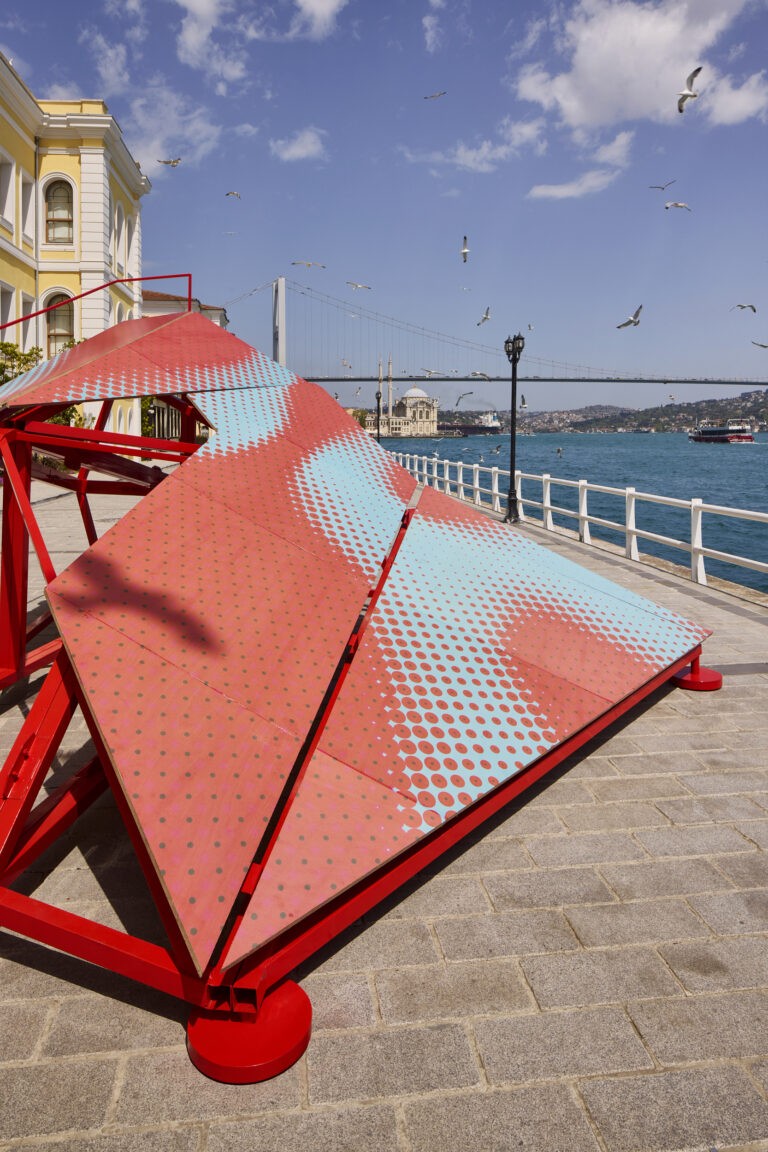
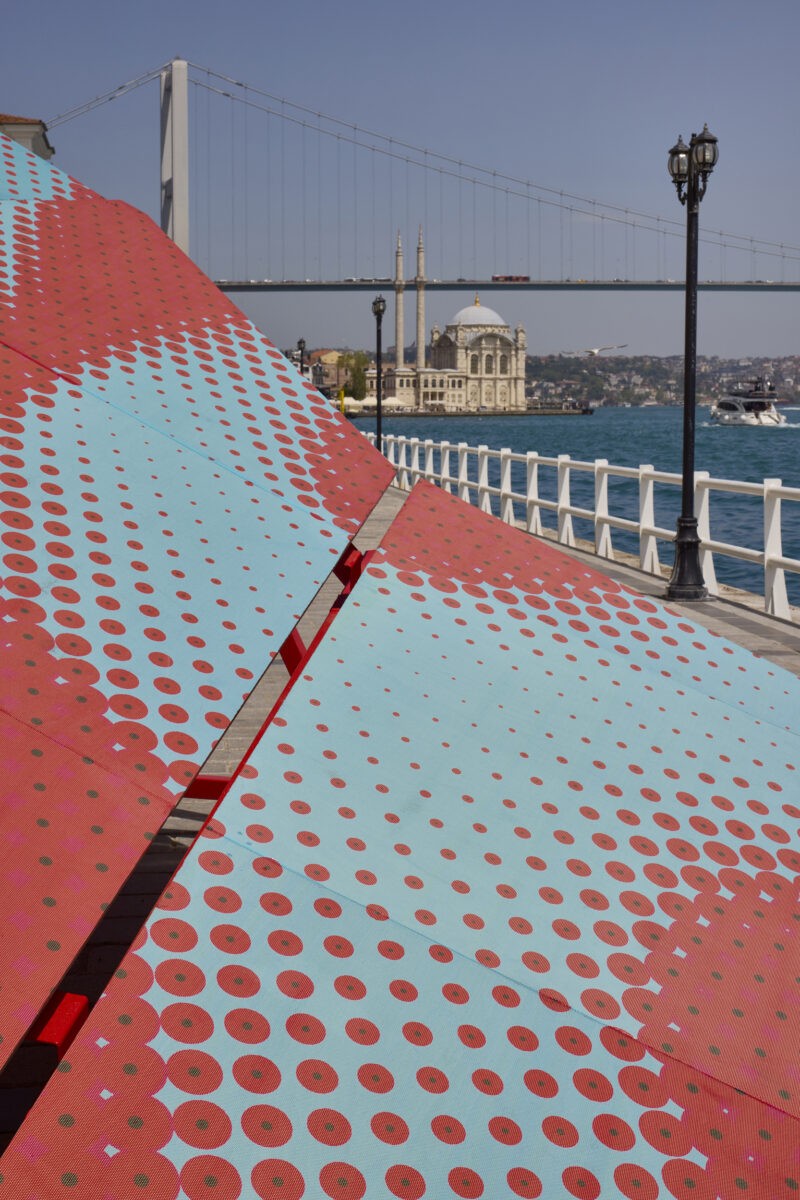
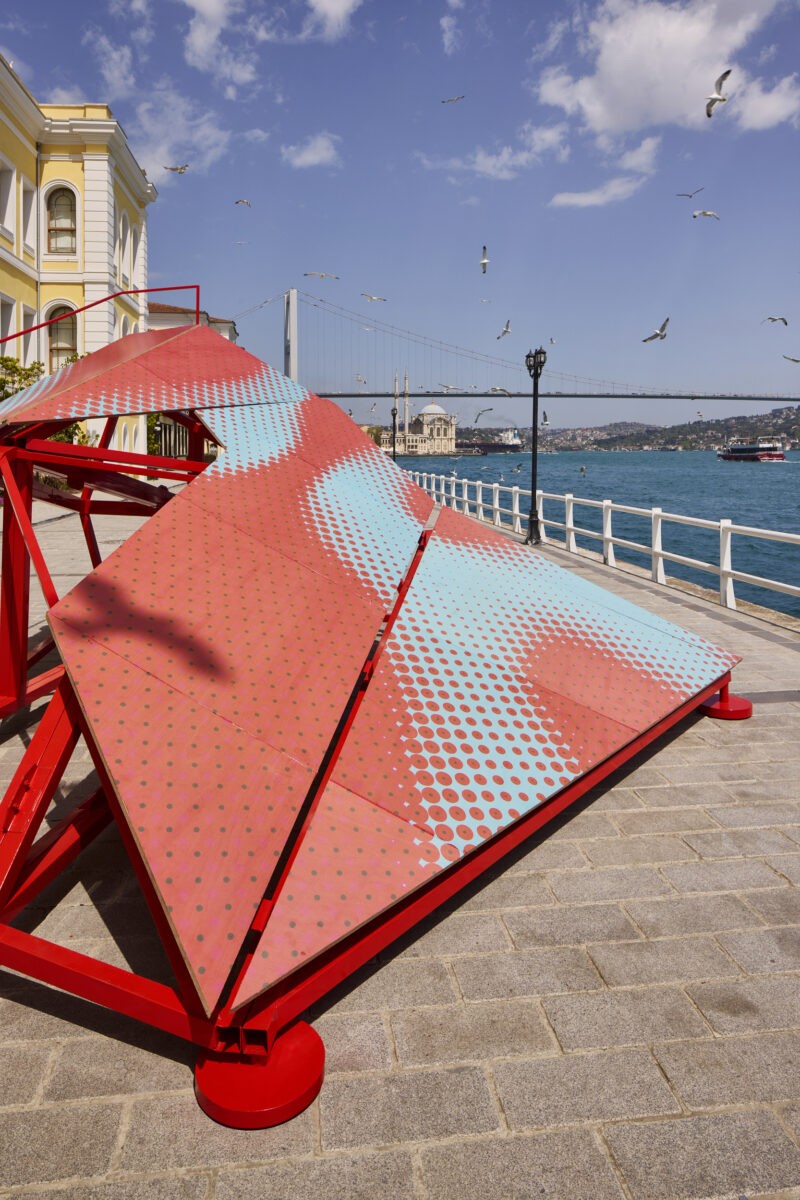
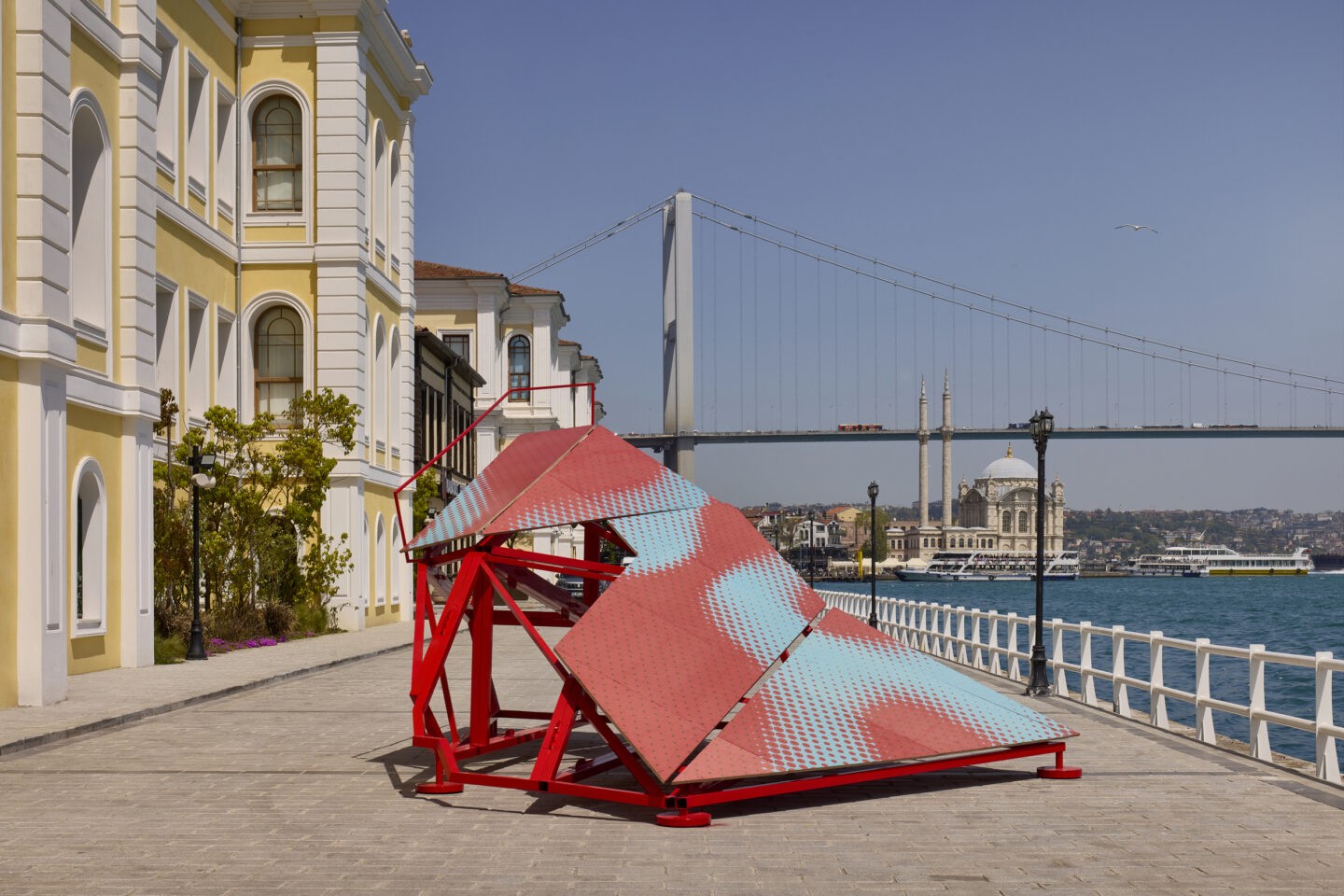
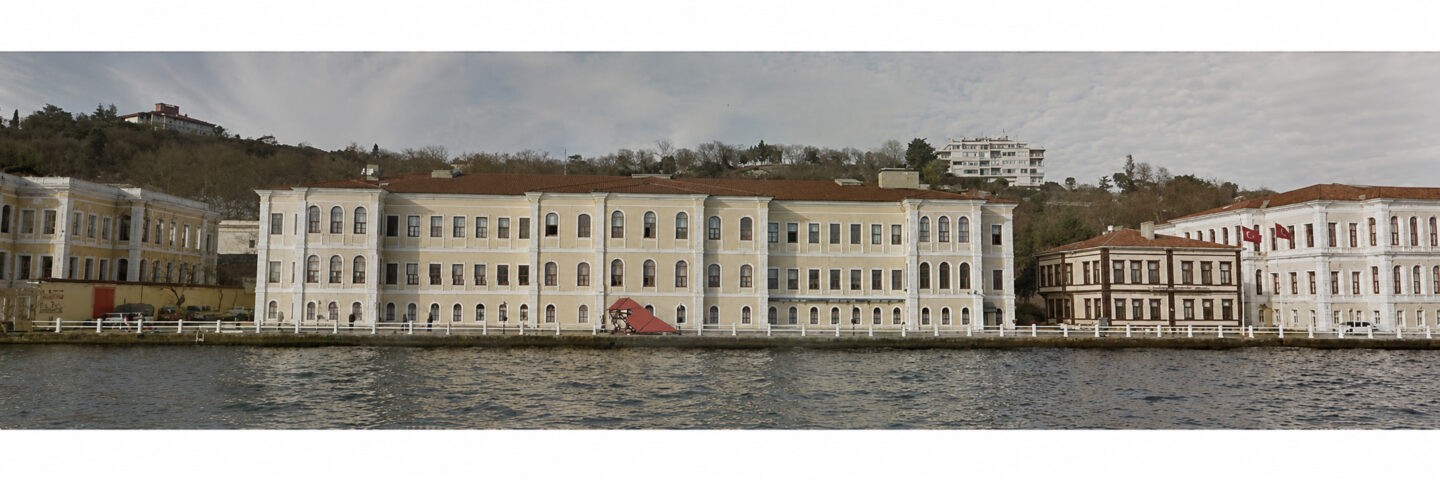
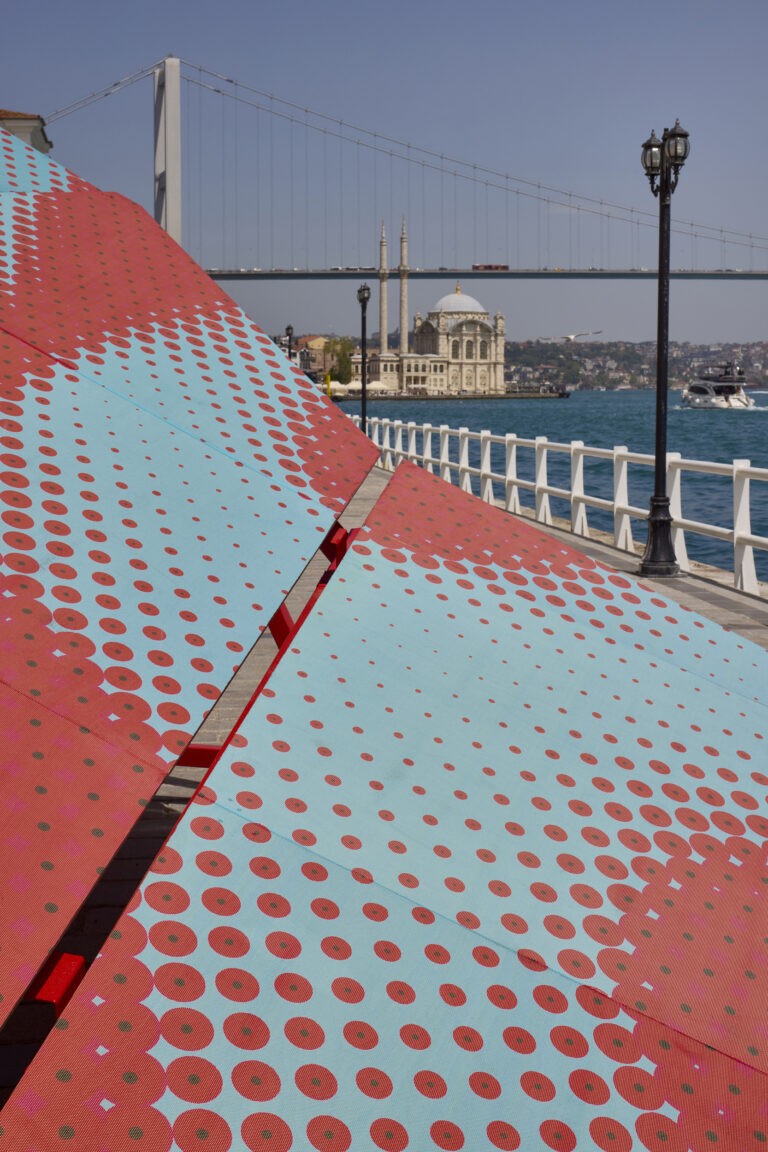
Oblique Land is designed for the unique Bosphorus-side setting of Kabataş High School for the Global Design Forum. Alper Derinbogaz takes this opportunity to open up a lesser seen vantage point of the Bosphorus to the public. Reconstructing the dialogue between ground, body, and city, the project carries forward Derinboğaz’s critical approach against the privatization of Bosphorus views. It redefines perception and movement through an oblique topography, creating a socially active architectural interface between the city and its citizens.
The installation sits at an exterior context at the heart of the Bosphorus: the Kabataş High School waterfront, as part of the Global Design Forum. The Oblique Land is rooted in the idea of creating a socially ambiguous architectural interface between the city and the citizens. It is neither a staircase nor a level, but rather a continuous tension that demands activity between the user and the view, reconstructing the once public hills facing the Bosporus . We believe it is crucial to use these moments to emphasize awareness of our collective ownership of urban landscapes, in this case, our most iconic geographical statement, the Bosphorus. Join us on 13th of May at the preview of the Oblique Land.
From Passive Ground to Active Architecture
In conventional architectural settings, the ground is often treated as a passive plane something to stand on, yet rarely to be consciously experienced. Oblique Land blurs the sharp distinction between horizontal and vertical planes, transforming the ground into an active architectural element that triggers movement, questions balance, and directs the gaze.
It is neither a staircase nor a level, but rather a continuous tension that demands activity between the user and the view. The spatial vision evolves here into a physical tension with gravity. As visitors move across this oblique topography, they rediscover not only the Bosporus but also the position of their own bodies within the city.
In Dialogue with the Bosphorus: The Seeping View
The installation is positioned as an interface at the intersection of Kabataş’s historical and geographical layers. Here, the Bosphorus is no longer a static postcard view; it becomes a living context that seeps through the dynamic surfaces of the structure. We believe it is crucial to use these spatial moments to emphasize awareness of our collective ownership of urban landscapes in this case, our most important geographical icon, the Bosphorus.
The rationality of the steel structural system and the warm tectonics of the timber surfaces establish a mutual tension and harmony with Istanbul’s historical silhouette and the sea’s horizontality.
A Multifunctional Threshold
Oblique Land is more than a static object; it operates as a socially and physically ambiguous threshold between the visitor and the surrounding environment. Through its oblique form, it alternates between an urban landscape, a seating surface, and an observation platform opening toward a lesser-seen vantage point of the Bosphorus. This multifaceted character carries the critical legacy of Panorama into the public realm, transforming the structure into an urban experience enriched by movement, encounter, and shifting perspectives.