Interview with Alper Derinboğaz
10 / 09 / 2026Question 1: Could you briefly tell us about the career journey of Alper Derinboğaz, who founded Salon as a meeting ground for new ideas and critique in architectural design?
I graduated from Istanbul Technical University in 2005, and then completed my master’s degree with high honors at UCLA on a Fulbright scholarship. Following that experience in Los Angeles, I founded Salon in Istanbul in 2011, and in 2021 we opened an office in New York as well. In 2014, in the first year of Turkey’s participation in the Venice Architecture Biennale, I represented the country with my work “Modalities of the Spontaneous,” an in-depth study of Istanbul’s urban transformation. Over the years we’ve had some meaningful milestones, such as the Arkitera Young Architect Award, the Chicago Athenaeum’s Green Good Design Award, and being featured among ArchDaily’s Best New Practices of the Year. My book “Geospaces” was also exhibited at the Royal Spanish Academy in Rome. I have also taught courses at Pratt Institute.
But beyond all of this — beyond the titles and awards that conventionally define a career — what really shaped me were curiosities that go back to a much younger age. For many years I was deeply drawn to painting and art; I trained in painting for a long time, not at a school but in an individual studio. It was during my middle and high school years that I began to understand how a craft is mastered, how an idea emerges and spreads, and how it affects people. That experience — seeing how much time and effort it takes to bring something into being — shaped me even more than my formal education did.
Of course school mattered too; I could say I was a fortunate student. I had the opportunity to work with highly valued teachers such as the late Ferhan Yürekli, Cem Altun, and Arzu Erdem; in America, I studied under figures like Frank Gehry, Thom Mayne, Greg Lynn, and Sylvia Lavin. In school, theoretical knowledge and practical life are usually kept separate; but in these environments I also witnessed, even if we couldn’t fully appreciate it as students at the time, thorough discussions of how an area of expertise or a project is actually debated and shaped. Afterward, in my professional life, I tried to capture all of this. I believe that practical work, without an idea of an ideal world behind it, remains weak; my aim has always been to reach for that ideal.
Question 2: What is the value of the concept of “Geospaces” for Alper Derinboğaz? How do you draw on the concept/thinking of “Geospaces” when bringing local and traditional architecture together with contemporary/sustainable architecture?
“Geospaces” actually describes the fundamental approach underlying the body of work we produced at Salon during a certain period. In our geography, architecture should be built with a genuine relationship to the land, the ground, and the environment — but unfortunately, the opposite is usually practiced. In my projects I have always tried to establish that relationship; in doing so, my concern was never theoretical beauty or intellectual curiosity, but the real conditions imposed on us by the geography we live in. Because the architecture discussed both in education and in the press is generally an architecture that stands independent of its surroundings — largely a mode of production chasing fashionable materials and tectonic curiosities generated in response to problems experienced in the West.
Yet Turkey has very different opportunities. First of all, we are in an earthquake zone; earthquakes should be our most important architectural subject, but even in school, how the layers beneath the ground affect architecture is almost never discussed. Another defining factor is how pronounced our topography is: in the West, cities are generally built on flat, easily developable land, following clear rules, setback distances, and planned systems like the Barcelona block or the American grid. In our case, no such order ever existed; our cities have grown across very different geographic conditions, without planning, spreading wherever development happened to occur. This lack of planning has, on one hand, produced freer cities; but on the other hand, it has also led to construction that devastates the characteristic landscape, disregarding its beauty and value entirely. Because profit has always been the biggest determining factor, architecture has been reduced to questions like how to make the most of basement floors. Yet producing quality work can be just as valuable — even just as “rentable” — as that.
Finally, Turkey’s climate also offers us a great opportunity. We are almost entirely unfamiliar with the harsh weather conditions experienced in much of the world; yet instead of creating open spaces that take advantage of this comfortable climate, we measure everything in terms of enclosed space. In fact, open spaces can be just as important as enclosed ones, and the geothermal energy capacity beneath the ground can also be put to use. In my book “Geospaces,” I explain all of this — somewhat like a Trojan horse: within a very Western, Anglo-Saxon mode of expression, I discuss what could actually be valuable in our part of the world.
Question 3: Which of your projects would you call your “architectural manifesto”? Which important values of your manifesto does it embody?
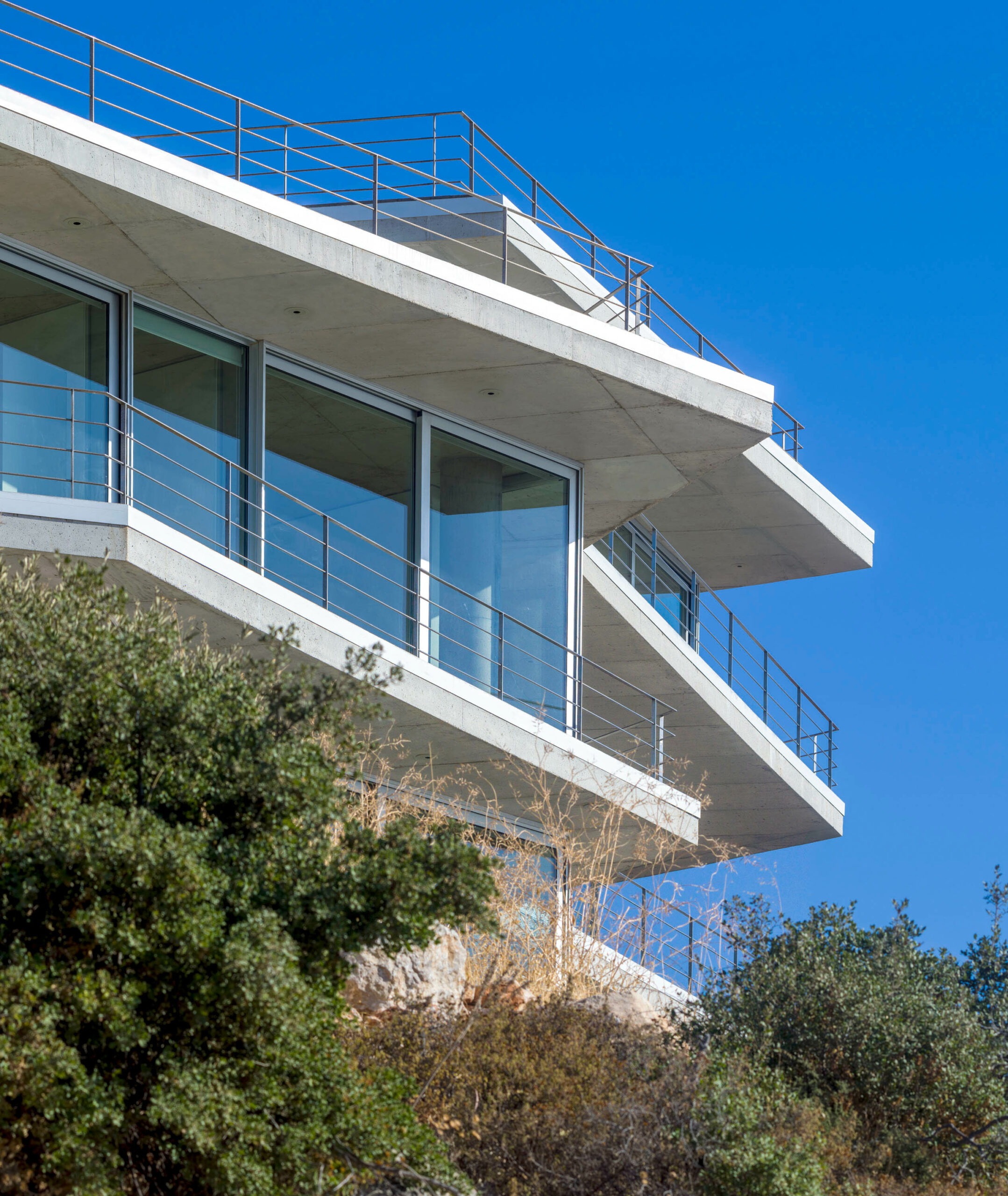
Actually, we try to treat every project as a mode of thinking in its own right; I don’t do this as a conscious strategy, but simply because that’s how my mind works. Still, I believe there needs to be an underlying hierarchy of approaches that brings everything together. Architects are usually known through their houses — Le Corbusier, Borromini, Bernini — because villas and houses form the smaller-scale, thematic core of one’s work. In that sense, I could highlight Topos House: its relationship with the ground, its use of geothermal energy, its connection to topography, the simplicity of its materials, and its distinctive structural system — that is, its pursuit of solving more with fewer structural elements — bring together many of the ideas central to our work.
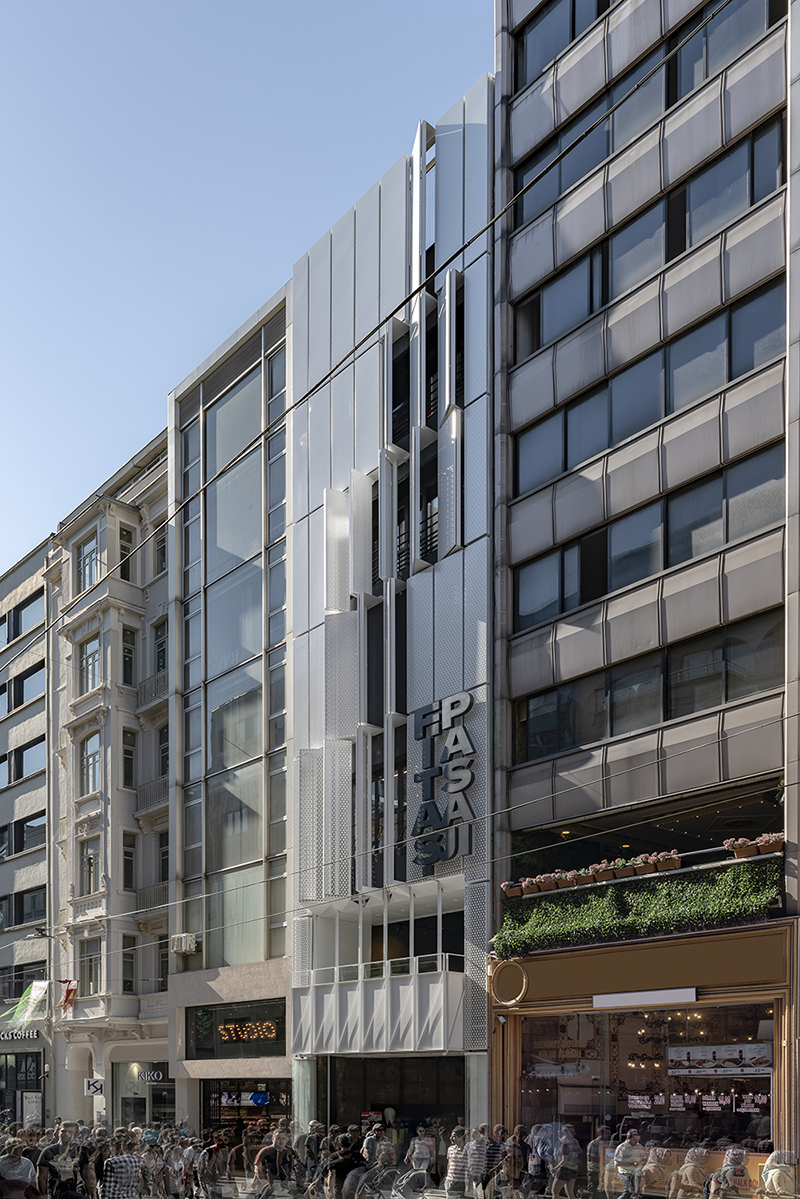
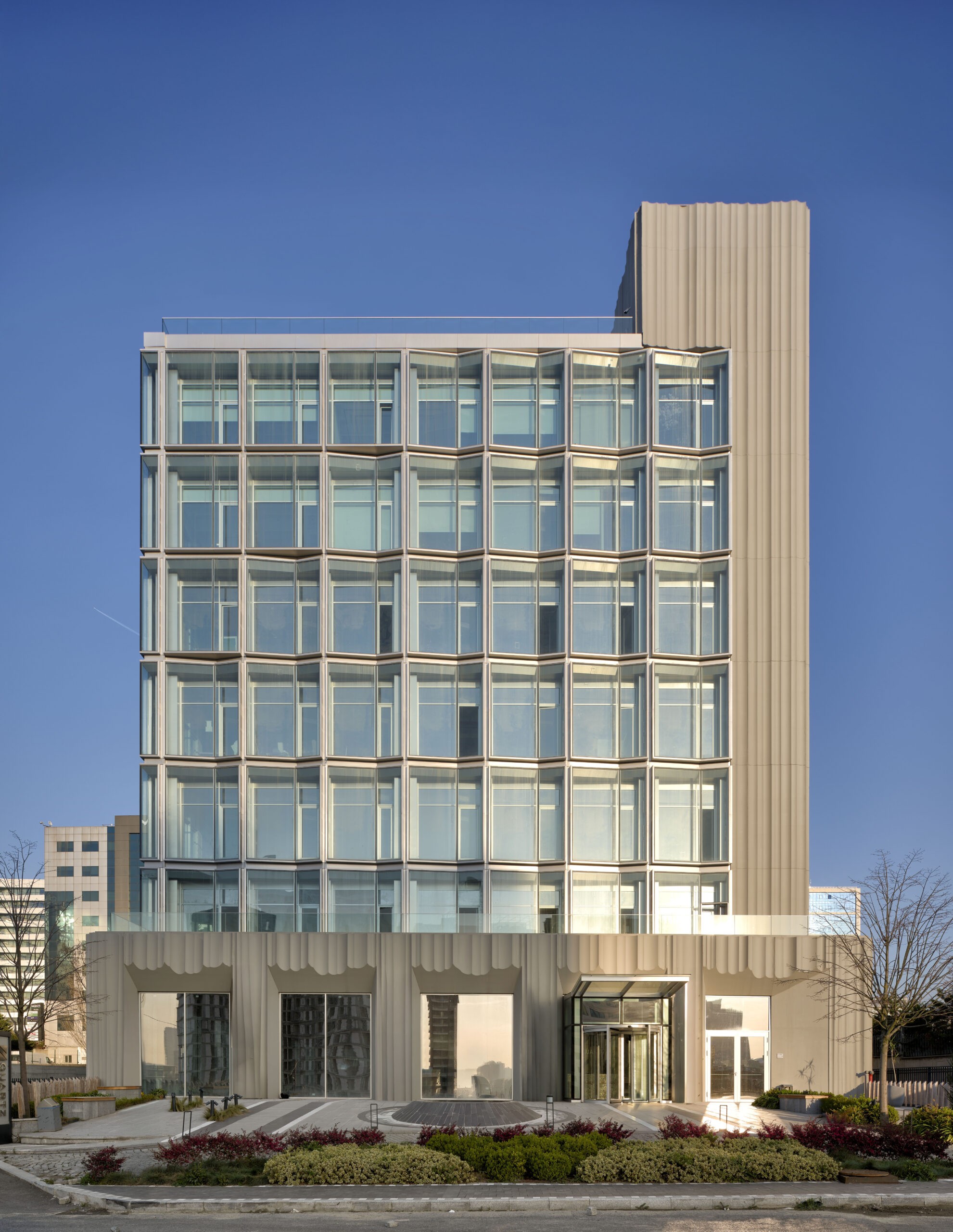
Quartz Plaza is another very important example. It’s a project that shapes what lies beneath the building to contribute positively to seismic performance, while also using Turkey’s climate to provide passive climate control for the structure — bringing together many innovative ideas. Looking at earlier projects, Panorama, Augmented Structures, and Fitaş Passage each represented a specific idea. But the most important project is undoubtedly the Museum of Istanbul; it holds a special place for us both because it is an institutional and public building, and because it has the potential to make a less visible part of the city more accessible and usable.
Question 4: Which building material are you closest to — one whose nature you feel you have mastered, and which, in turn, you’re confident understands your language? Could you give examples of standout projects featuring this material?
Actually, every building material holds a special place for us. Glass is a beautiful element; it’s usually seen as a transparent material, but we’ve often preferred to treat it as a solid, massive object instead. Reinforced concrete is also very important to us — not just as a structural element, but for the balancing effect it lends to a building through thermal mass. Steel is likewise a critical material for us; especially in a country like Turkey where manufacturing quality isn’t always guaranteed, the precision that steel demands makes it a method we frequently turn to for structures that need to come out sharper and more precise.
Ultimately, what distinguishes an architect isn’t the choice of material itself, but how that material is used in relation to the whole of the project. So it wouldn’t be right for me to single out just one material.
Question 5: In a layered, constantly transforming, and complex metropolis like Istanbul, does designing a public space such as the Istanbul City Museum grant an architect freedom, or does it impose very sharp constraints? Could you answer while also taking your academic identity into account?
The Museum of Istanbul is one of the projects we are most proud of, and one of the most important for us. Because architecture’s greatest contribution to humanity emerges most in public space — a space that everyone can use, that speaks to everyone. But from the standpoint of an architect’s practice, large-scale projects like the Museum of Istanbul, where the responsibility far outweighs the return, inevitably become things that constrain an architect’s life and the many other kinds of work they might otherwise do. I think this is a reality we already accept the moment we step into this profession, so it wouldn’t be right to complain about it; still, it’s a critical issue.
Large-scale projects involve an extraordinarily long process — five, ten, fifteen years — from the initial idea to completion, and then to resolving the issues that emerge after completion. Throughout this process, we often see many architects withdraw from a project, hand it over, or find themselves at odds with the client. I think these timeframes and continuities aren’t always compatible with the nature of human life and the way we work. Thinking about it through my academic identity, perhaps what’s needed today is to develop some kind of AI application — using current technology — that can continuously convey what needs to be done in a project even under unexpected circumstances, because unfortunately, in many public buildings built carefully with our tax money, institutional and administrative changes, along with staff turnover, can lead to serious losses.
Beyond all of this, the Museum of Istanbul is also very important for its potential to add a new location to the city. We define and evaluate Istanbul through certain buildings in certain districts — from Sultanahmet to Kadıköy Point, from Taksim Square to AKM — so I believe creating new public consciousness in this way is extremely valuable. I hope that once this project is realized, the contribution we envisioned for it comes true as well.